Geotechnical Engineer Resume Example
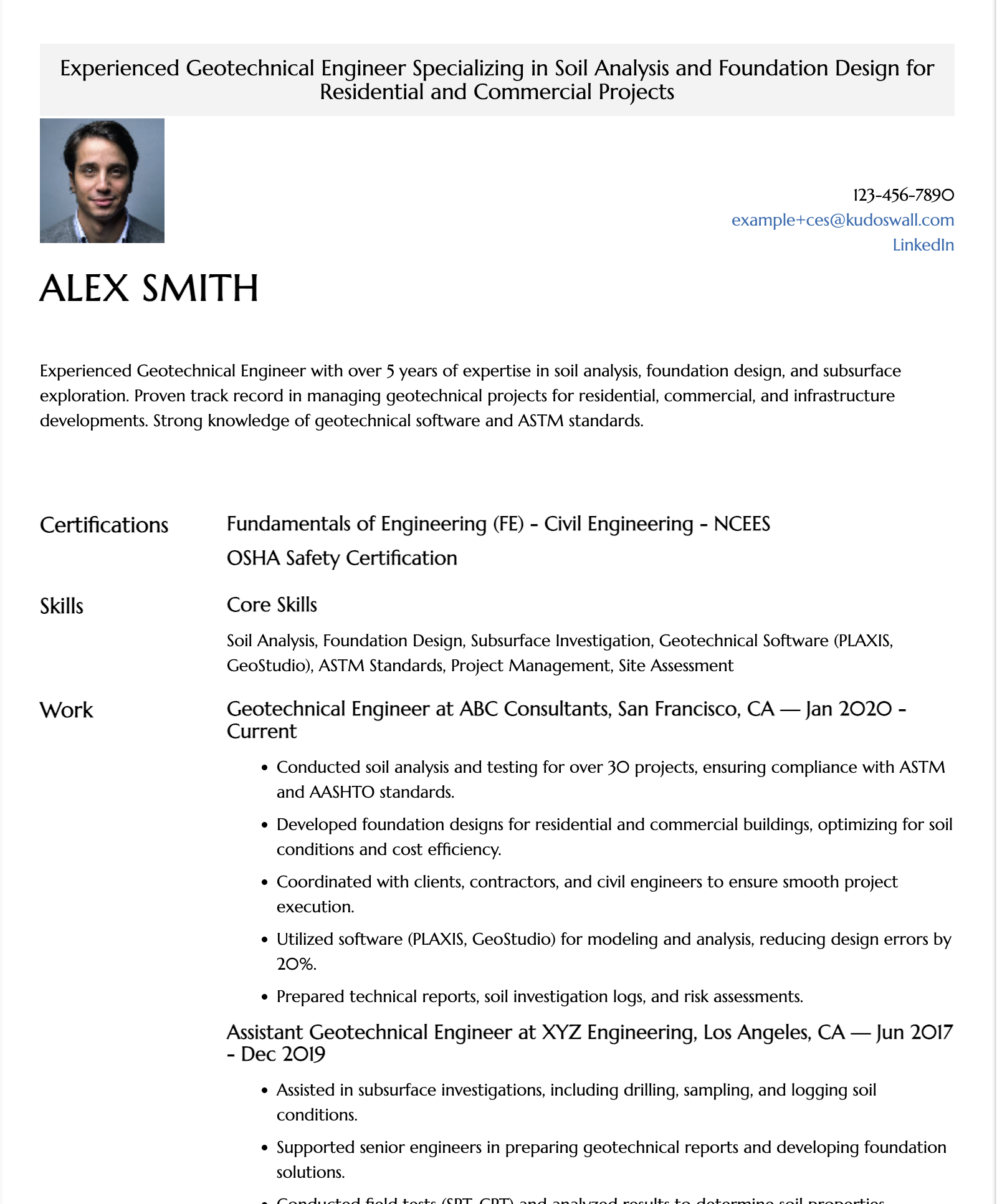
Create a resume that emphasizes your skills in soil analysis, foundation design, and project management. Ideal for aspiring Geotechnical Engineers.
Click to Build Your Resume
Key Features of This Geotechnical Engineer Resume
- Technical Skills: Soil testing, foundation design, geotechnical software (GeoStudio, AutoCAD).
- Projects: Managed soil stability projects, foundation assessments, and construction site analysis.
- Certifications: Professional Engineer (PE), Certified Geotechnical Engineer.
- Education: Bachelor's degree in Civil Engineering with a focus on Geotechnical studies.
Job Description for a Geotechnical Engineer Role
Geotechnical Engineers specialize in analyzing soil, rock, and groundwater conditions to design foundations, slopes, and other earth-supporting structures. They play a critical role in ensuring the stability and safety of construction projects.
Key Responsibilities
- Conduct geotechnical investigations to assess soil and rock stability for construction projects.
- Design foundations, retaining walls, and slope stabilization systems.
- Perform soil and material testing using laboratory and field methods.
- Analyze geotechnical data to predict potential risks like landslides or soil liquefaction.
- Collaborate with civil engineers, architects, and project managers to ensure safe and cost-effective designs.
Possible Interview Questions for a Geotechnical Engineer Role
- Can you describe a project where you solved a complex geotechnical challenge?
- What testing methods do you typically use for soil and rock analysis?
- How do you assess the risk of landslides or soil liquefaction in a project?
- What tools or software do you use for geotechnical modeling?
- How do you collaborate with other engineering disciplines during a project? Prepare for Your Interview with AI
Frequently Asked Questions (FAQ)
1. What should a Geotechnical Engineer include on their resume?
Highlight skills in soil testing, foundation design, and geotechnical analysis. Include experience with tools like Plaxis, GeoStudio, or other geotechnical software.
2. What certifications are valuable for Geotechnical Engineers?
Certifications like PE (Professional Engineer), GE (Geotechnical Engineer), or OSHA training for safety compliance can enhance your resume.
3. How do I showcase geotechnical project experience on my resume?
Include specific examples of projects, such as foundation design, slope stabilization, or soil testing, and detail the methods and tools you used.
4. What industries hire Geotechnical Engineers?
Geotechnical Engineers work in construction, environmental consulting, mining, transportation, and oil and gas industries.
5. How do I tailor my resume for a Geotechnical Engineer role?
Focus on technical expertise, field and lab testing skills, and software proficiency. Use keywords like "soil stability," "foundation design," and "geotechnical investigation."
Find Your Resume Score
Analyze your resume and get actionable feedback on how to improve your resume score and pass ATS filters.
Check Your ScoreBuild Your Resume
Create a professional resume with our easy-to-use AI resume builder. Choose from templates and customize your resume to land your dream job.
Start BuildingPrepare for Interviews
Get ready for your next job interview with our AI-powered interview preparation tool. Practice common questions and get real-time feedback.
Start Preparing