Water Resources Engineer Resume Example
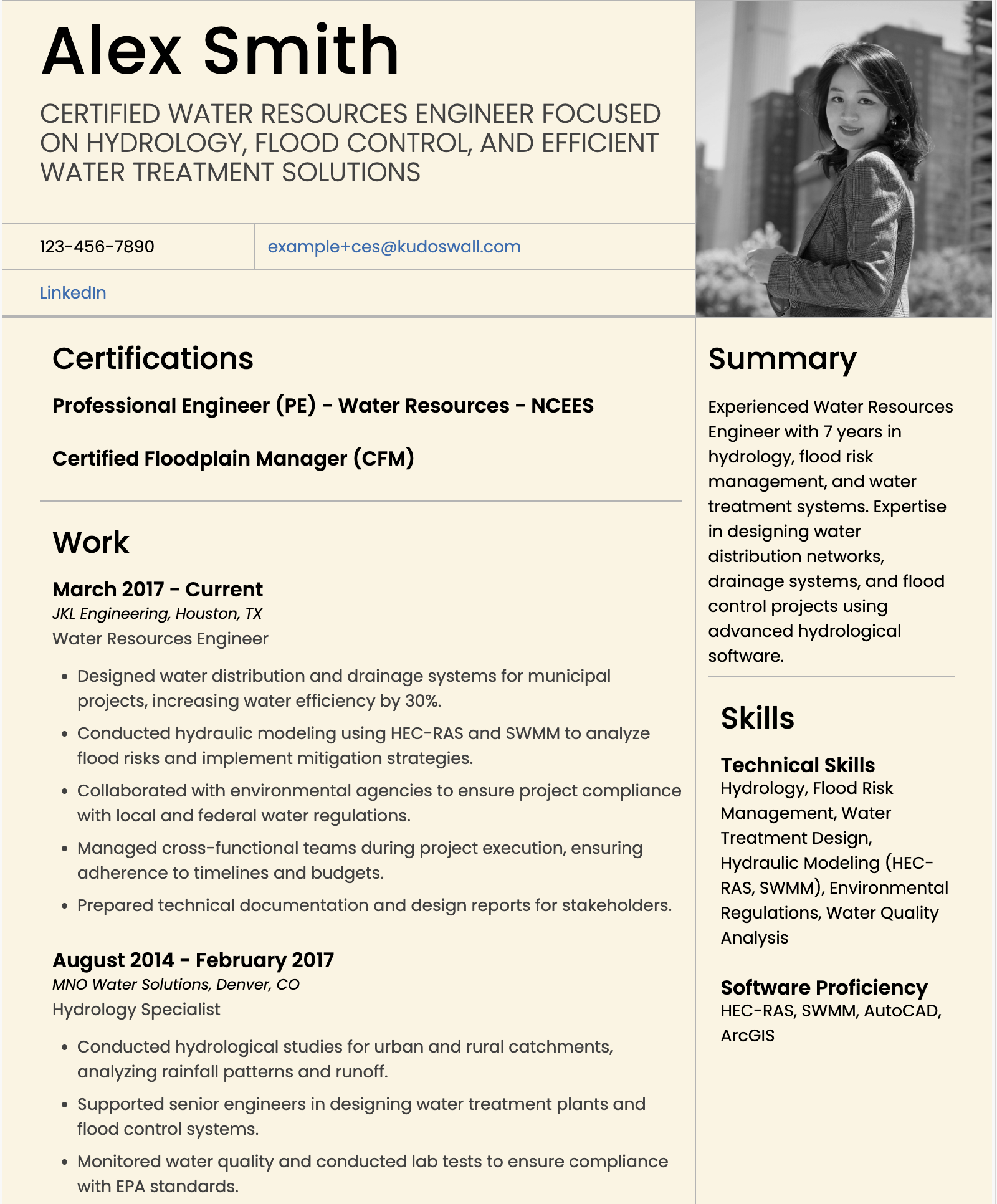
Enhance your environmental engineering career with a structured resume that showcases your skills in water resource management, hydrology, and project planning.
Click to Build Your Resume
Key Features of This Water Resources Engineer Resume
- Technical Skills: Hydrology, water management systems, GIS software proficiency.
- Projects: Managed water treatment projects, flood control measures, and urban drainage systems.
- Certifications: Professional Engineer (PE), Certified Floodplain Manager (CFM).
- Education: Bachelor's degree in Environmental or Civil Engineering.
Job Description for a Water Resources Engineer Role
Water Resources Engineers specialize in the planning, design, and management of water systems, including dams, reservoirs, irrigation systems, and flood control projects. They ensure sustainable water usage while protecting against water-related hazards.
Key Responsibilities
- Design and oversee the construction of water supply systems, wastewater systems, and flood control structures.
- Conduct hydrological and hydraulic analyses to optimize water resource management.
- Develop models to predict water availability, quality, and usage trends.
- Ensure compliance with environmental regulations and sustainability standards.
- Collaborate with stakeholders to address water management challenges.
Possible Interview Questions for a Water Resources Engineer Role
- Can you describe a project where you optimized water resource management?
- What experience do you have with hydrological modeling tools like HEC-HMS or SWMM?
- How do you ensure compliance with environmental laws in water-related projects?
- What challenges have you faced in designing flood control systems?
- How do you balance environmental conservation with infrastructure development? Prepare for Your Interview with AI
Frequently Asked Questions (FAQ)
1. What should a Water Resources Engineer include on their resume?
Highlight technical skills like hydraulic modeling, GIS analysis, and project management. Include experience with water conservation, flood mitigation, and sustainable infrastructure design.
2. What certifications enhance a Water Resources Engineer's resume?
Certifications such as PE (Professional Engineer), Certified Floodplain Manager (CFM), and LEED Accreditation are highly valued in this field.
3. How can I showcase hydrological modeling skills on my resume?
Include specific tools like HEC-RAS, HEC-HMS, or SWMM and mention projects where you used these tools to optimize water management or design flood control systems.
4. What industries hire Water Resources Engineers?
Water Resources Engineers are employed in industries such as public utilities, environmental consulting, government agencies, and construction firms focusing on water infrastructure projects.
5. How do I tailor my resume for a Water Resources Engineer role?
Emphasize technical expertise, project outcomes, and familiarity with environmental regulations and sustainable practices.
Find Your Resume Score
Analyze your resume and get actionable feedback on how to improve your resume score and pass ATS filters.
Check Your ScoreBuild Your Resume
Create a professional resume with our easy-to-use AI resume builder. Choose from templates and customize your resume to land your dream job.
Start BuildingPrepare for Interviews
Get ready for your next job interview with our AI-powered interview preparation tool. Practice common questions and get real-time feedback.
Start Preparing